House Maintenance: The Top 3 Things To Do Before You Sell

Sometimes the best things in life are free. One of them is not owning a home, because there are costs to home ownership.

Owning a home—let alone purchasing one—is not cheap, but is definitely the goal of many people.

If you’re a home seller, there are a few things you just cannot afford to neglect. If you do the following, selling a house will be easier and will pay a handsome dividend. And your bank account will thank you for it.

These tips will also help in selling the home faster, which means you can trade time for time. The following are low-cost suggestions that should be considered in preparing your home for sale.

1.Routine home maintenance—Clean Up—get your crap outta there. Have you ever checked into a nice hotel? A really nice one?In your mind’s eye, walk into the bathroom… what do you see?

What do you see when you walk into the bedroom area? Exactly! You don’t see clothes everywhere. The bed is neatly made and there are no foreign objects lying around on the bedside table.

The same goes for the washroom, the laundry room and just about every other part of the house a buyer is sure to venture into.

Routine home maintenance is important in every aspect of the house. That includes everything from putting your clothes away to home painting.

2. Organize—Blame MTV’s Cribs or Million Dollar Agent—yes, buyers will look in your fridge, even in your kitchen cupboards.

So, why does it matter to you if the cupboards are organized? Because we’re trying to make a lasting impression on the buyer. We want them being wowed with every facet of your home.

We want them to feel confident that the current owner has cared for this home beyond expectations. And we ultimately want the buyer to make us an offer that we can’t refuse

People that buy and sell somewhat frequently understand this.

3. Bang for your buck—the streets of Beverly Hills are lined with mansions. Mansions worth a lot of money—millions upon millions of dollars.

Do you know what else lines the streets of Beverly hills? Perfect boulevards. Manicured grass and properly pruned trees. Fresh flowers and no garbage and debris.

Make the appearance of your home look like its own version of Beverly Hills and you’ll be one step closer to being on a real estate TV show in no time.

Consider painting kitchen cabinets. Bathroom cabinets, too. Look to Google for commercial painting services or your local real estate agent for a recommendation.

Look on Realtor.ca and MLS to see what other homes for sale look like. Tim Allen on Home Improvement also knows best. Make sure to hire a professional if you touch anything like electrical or plumbing.

A good sellers agent can make recommendations based on local market conditions. Recommend painting companies and handyperson services. Quality paints or cheap and cheerful can be decided upon with a consultation.

If your home needs a paint job, or even a new sump pump, a real estate brokerage should be able to recommend what is important to home buyers.

These small improvements affect what a home is worth. After all, aren’t you trying to sell for the most amount of money?

The Big Mistake

If you’re a home seller and you were preparing to get your house ready for Realtor.ca and MLS, be careful where you invest your money.

There are certain aspects of a home that have proven to yield a higher return on investment. For example, home renovations like a new kitchen or bathroom appeal to many buyers as they don’t have to go through the renovation process after they move in.

Nowadays, putting in a swimming pool and having a clean yard goes a long way. With more people moving to the suburbs swimming pools are more popular than ever.

However, finishing basements and doing an addition for the purposes of selling are probably not money well spent. It’s important to invest money into your home that adds to its curb appeal and overall first impression.

1 + 1 does not equal 2 in a real estate transaction. Before spending significant money on your home it is recommended to consult with your local real estate brokerage. Real estate agents are in and out of many homes and work with fires. This gives them first-hand knowledge of buyer trends.

Cleaning up that garage and removing Christmas lights from months ago shows signs of pride of ownership. It all makes a difference in the end as buyers base their purchasing decisions on how they feel.

If a home shows that it is cared for and loved, the chances of a buyer making an offer earlier in the listing—and for more money—increase. It’s important to keep up with home maintenance and home repairs.

If you’re unsure of the condition of your home, consider hiring a home inspector. Having a home inspection done is like having home insurance. It safeguards you against any surprises at a later date.

Home styling and home decor go a long way as well. A properly styled home can affect home prices. Home staging and decluttering go a long way.

General home maintenance, like keeping gutters clean of debris and water away from foundations impresses upon the buyer that the home is well maintained. It also helps with personal liability should the worst happen and you have to call your insurance company.

Advice In A Nutshell

  • Consult with a local real estate agent who knows what buyers are looking for in your marketplace
  • Pay attention to the small details, like organizing cupboards and decluttering
  • Home improvements, such as painting old kitchen cupboards yield a tremendous result in the form of a higher sale price
  • Think of your home like a fancy hotel. It’s how buyers see all that matters when they walk through your home.


A SUCCESSFUL & INFORMATIVE SESSION: REAL ESTATE FOR MILLENNIALS

Thank you to all of those who came out to support our session around owning real estate and strategies for millennials.

The Regan Team is proud to announce that 100% of funds collected for registration (total of $260) were donated to The Royal LePage Shelter Foundation.

https://www.royallepage.ca/en/realestate/about-us/shelter-foundation

Look forward to seeing you again soon.

Fixed Rates / Short Term Outlook

Fixed rates were improving in early February until two data sets were released over the last week.

  1. Canada’s employment report came in above expectations.
  2. USA inflation data caused a spike in the bond yields.

Canada Jobs Report

The Canadian labour market added 150k positions in January, with full-time employment up 121k and part-time employment up 28.9k. This was 10x the expectations of 15,000. As wage inflation is a key contributor to CPI, this is a cause for concern moving forward for interest rates.

The report is sure to raise eyebrows at the Bank of Canada. The messaging for a pause on further rate hikes is contingent on a slowing of economic growth and an easing in the labour market. The Bank won’t adjust after just one report, but it will be closely watching to see if this trend of massive job gains continues.

U.S.A Inflation Numbers

United States inflation data sets were worse than projected.

  • 6.4% y/y for headline inflation v.s. 6.2% consensus.
  • 5.6% y/y for core inflation vs. 5.6% consensus.
  • 4.6% for the Fed’s much-watched 3-month rate (not good news) vs. 4.3% in Dec.

Over the past year, shelter costs have accounted for roughly 60% of the total increase in core U.S. inflation. CIBC predicts this component will ease in the months ahead due to lag effects.

Overall the data could have been a lot worse, but the bond market is now reacting and it is taking yields up. This is causing fixed rates to rise to late 2022 levels.

Canada’s 4-year swap rate which is a leading indicator of fixed mortgage pricing has followed U.S. yields higher by 11 bps. It’s now approaching December’s high.

January Housing Stats

(18.3%): Average home price declines.

  • The most in four decades of CREA records.

(1.9%): HPI drops month over month.

  • Tied for the biggest monthly decline in records back to 2000.

$612,204: Canada’s average resale home price

  • Down $14,114 from December and down $204,000 from the peak.

New listings were the lowest for a January in over two decades.

Housing Starts vs Immigration – Are We Building Enough?

  • Desjardins estimates that housing starts would have to jump by 50% (100,000) to handle the surge of future demands caused by immigration.
  • Canada is estimating that there were 955,000 newcomers to Canada in 2022.


What are the Impacts on Rent?

As more individuals enter the country, and we lag behind in suitable homes, rent will continue to increase. Just look at the two charts below, and the substantial rental increases over the past year.

Investor Housing Data

For the first time, Stats Can has published data on investors vs principal residence holders across Canada. This data is for 2020 and the full report can be found here.

Note; investor is defined as an owner who owns at least one home that is not used as their principal residence; cottage, second home, rental property, etc. No tenant is required.

Keys findings;

  • The proportion of investors among owners varied from 20.2% in Ontario to 31.5% in Nova Scotia.
  • Condominium apartments were used as an investment more often than houses (single-detached houses, semi-detached houses, row houses, and mobile homes). Ontario topped the list with the highest rate of condominium apartments used as an investment, at 41.9%.
  • Houses used as an investment were mainly owned by individuals living in the same province as the property.
  • The highest proportion of investors is in British Columbia
  • For every 100 home owners, 20 own a second property
  • The highest proportion of investors from out of province is in Nova Scotia.
  • The majority of investors own a second home in the province in which they reside.
  • Ontario has the highest proportion of investors owning condo’s as their investment.
  • Toronto, City = 21.70%
  • Vancouver City = 32.50%
  • Greater Vancouver, district = 42.10%

Fast Facts

  • Canada’s most mortgaged city is Milton, ON. 79% of homes have mortgage registrations.
  • 3,726 – That’s the number of times humans were attacked by wildlife in Alberta over the last decade—the highest of any province. The most likely animal to attack is an Elk.

Questions?

Connolly Capital Mortgage Solutions

119 Lakeshore Rd. W, Upper Level, Mississauga, ON

(905) 491-3805

Matthew O’Neil – Mortgage Broker

matthew@connollycapital.ca

John O’Neil – Private Lending

johnoneilmortgage@gmail.com

Sean Clearihue – Mortgage Agent

sean@connollycapital.ca

Trenton Beaty – Mortgage Agent

trenton@connollycapital.ca

Kane Boultwood – Mortgage Agent

kane@connollycapital.ca

Rebecca Tanner – Client Relationship Manager

rebecca@connollycapital.ca

Help! I’m Rich. I’m Rich in Equity.

Help? What for? Many Canadians are equity-rich by default of owning a home, but don’t know if they should unlock the cash they have earned by selling. If you have owned a home for longer than 18 months you’ve probably seen a decent increase in your net worth. And if you’ve owned a home for 10 years or longer, well, by some measure, you’re sitting on a small Klondike gold mine.

So what does this actually mean? Housing prices have gone up over 100 per cent* since 2012 and, in some areas, even higher. You may be very happy to know that. Well here is the icing for your cake. Assuming it’s your principal residence—the home you declare to CRA that you spend most of your time in—then upon the sale, it’s tax free… for now! I’ll come back to this.

Let’s say you’ve owned your home for five years. You bought it for $1m and it’s worth $1.5m today. That $500,000 gain is actually the equivalent to $713,118. Here’s the theory: Assuming a 53.53 marginalized tax rate, if you had to go and get a job and earn $500,000 you would be left with somewhere in the ballpark of $267,882, after paying taxes, for a NET difference of $445,236.**

Source: Toronto Real Estate Board

So why might you need help? Well, the equity is great from a net worth standpoint, but if equity erodes because of a higher interest rate environment and falling housing prices, you may stand to lose.

Many people find themselves in a position where they are equity-rich. What to do to lock in the cash equivalent begs the question of whether to sell and put some cash in their pocket, diversify into equities, or stay in real estate using a passive investment vehicle like a REIT.

For many people, the idea of simplifying life financially feels like a breath of fresh air. Many people are moving to smaller homes, in tertiary markets where housing prices are lower, or even to the cottage. Every homeowner has different requirements.

For those that have seen a nice uptick in their net worth, many are taking cash off the table, selling now and liquidating their gains.

Capital gains taxes have long been debated in parliament. The US has already moved towards a tax on the capital gains of a home sale. Canada currently does not. Somehow we are going to have to pay for our country’s debts and one of the “easiest” ways to do so is to tax the gain over our long coveted principal residence.

So should you sell now and lock in your gains? I guess that answer is up to you. Here are a few questions that may help with the decision:

    1. Do I think housing prices will go higher in the near-to-mid-term with the rising cost to borrow?
    1. Is taking some cash off the table a prudent decision in your investment time horizon?
    1. Does the thought of paying down debt or other financial obligations with the rise of interest rates sound appealing?
    1. Does your home still meet your needs?

Feel free to reach out to our team of real estate professionals. We may not have all your answers but sometimes just talking things through can help in your decision making.

*varies by area

**Approx. Turbotax calculator

EverLasting Words

Everlasting Words:

Years ago, early into my career, I was interviewed by a lady well into her 80s to sell her home. Widowed years before, the time had come for her to move once again. This time, she would be moving to an assisted living home. She said to me this would be the final house she would ever sell. Her late husband and her had moved 11 times in their marriage because of job transfers. I asked her what the most important thing to her was in selecting a Realtor. She said, “I need to know that I can trust you. A Realtor is like an extension of my family. You’re in my home and you’re in my life. I speak to you every day and I allow you to see what others don’t.”

Powerful! I have never forgotten those words and it has become the basis for how the Regan Team approaches the task at hand. –Matthew J. Regan

Here’s What You Should Know If Selling In 2023

It’s early January and coming off a busy holiday season, perhaps you have New Year’s goals and resolutions. This is often an exciting time of year. But, for many, especially faced with big financial or family decisions, the decisions that lie ahead can be daunting.

What if as part of your plan you are in the throes of getting your house ready to sell? Or perhaps you will ponder the idea in the coming months. What should you consider and what do you need to know to set appropriate expectations for a sale?

The last interest rate announcement by the Bank of Canada on December 7 saw another 50 bps hike bringing the prime lending rate up to 6.45%. If the bank raises again on January 25, the prime lending rate would reach a 21-year-high. To put it simply, the cost for a buyer to borrow money to buy your home has not been this high in a long, long time.

I can hear my father chuckle at the last point. He would say yes, but historically, money is still cheap and people need places to live. This leads me to my next point.

Demand for housing is expected to increase as we roll through 2023. Consumers are adapting to the rapid pace of increased interest rates and have a much clearer picture of what they can afford. The rate of employment is high and millennials, many of whom are at peak first-time home buying ages, will increase demand.

Supply is expected to stay below the rate of demand as many homeowners hold onto the sub- 3% mortgage rates they locked into last year. This will have an interesting impact on pricing as interest rates regulate the imbalance of supply and demand. Many are predicting housing prices to creep up ever so slightly. Be careful what you read about home price predictions, as prices will be highly variable across local housing markets.

As a seller, depending on the type of home and the location you live in, don’t expect 40 showings in a weekend or multiple buyers with briefcases of cash being thrown at you frivolously—as happened at this time in 2022. Instead, expect a more “normal” transaction, where your home may take 30, 60, or even 90 days to sell. Think of it like the olden days of 2018.

Price is key to a successful sale. If you’re hoping for a price that would have been achieved in Q1 2022, please go buy a lottery ticket and close your eyes; do not hold your breath and let me know what the outcome is. The fact is the market has shifted like it has for the past century and will continue to shift as the months and years come and go. Price your home appropriately and it will sell for fair market value.

Remember, relativity is important. Everyone sells a home for different reasons. Some because they have to. Some for financial strategy. Others out of fear. Make sure you have a solid plan of where to go before selling. Going at this blindfolded can be like playing with fire. If you are buying and selling in the same market, prices will be relative. If you’re selling in Oakville and moving to the Yukon, well, let’s say your dollar will probably go a lot further.

The bottom line is, if you’re selling your home, selecting an agent who has experience in a historically balanced market will be a critical decision. Navigating the sale of a home in the best of times comes with a risk. Selling a home is easy. Selling a home with reduced risk, in a timely manner, and for the highest price the market will bear, well, that’s a different story.

How Much Does It Cost to Sell a House?

Principal Residence / Real Estate Taxes / Home Renovations / Real Estate Fees-Commissions

Selling a home is a big deal. There is a lot riding on the sale of a home. Often there are moving arts that do not meet the eye and thus a trusted real estate professional should be consulted before doing so.

Renovations

To renovate my home or not to? An age old question. Simple math would suggest that if a homeowner spends a dollar on their home to improve it, then the price of the home should go up. 

Not all of the time. Studies have proven that money invested in curb appeal, the kitchen and bathrooms, yield the highest return on investment (ROI).

Like most things, there is an expensive way to do this and an inexpensive way. Unfortunately, there is no one answer that fits everyone’s situation. 

A trusted real estate agent can make life easier by giving direction based on current market conditions in your marketplace.

Taxes

Though it’s best to consult your local real estate lawyer, tax expert or accountant, here are a few of the basics. 

No! There is no tax to be paid on the sale price of your home if it is your principal residence – a home a Canadian taxpayer or family maintains as its primary residence. 

However, if the property you are selling is not that, such as a: vacation home, cottage, real estate used for business, investment property – there is a good chance the sale may be subject to a capital gain tax or HST. 

It is strongly advised to contact a professional before selling to understand whether tax will be owed.

Municipal Land Transfer Tax

Often confusing, this is a tax that is paid for by the buyer, not the seller. When you acquire land or a beneficial interest in land, you pay land transfer tax to the province when the transaction closes.

Note: Some municipalities, like the City of Toronto, charge a secondary land transfer tax

Calculating ROI

Property owners who own rental property should consider costs of investing based on annual roi. If you bought a property with the intention of making money on it, like an investment property, depending on your accounting style you’ll want to look at separating principal and interest. 

Interest would be an expense that would go against your Roi. Other deductions would be property taxes, maintenance and insurance.

Of course the purchase price matters so consult with your buyers agent to make sure you’re paying fair market value. It’s advised to work with a buyers agent that is an expert in the community you’re investing in.

Home Maintenance

If a home shows that it is well cared for and loved, the chances of a buyer making an offer earlier in the listing and for more money increase. It’s a Important to keep up with Home Maintenance and home repairs.

If you’re unsure of the condition of your home, consider hiring a home inspector. Having a home inspection done is like having home insurance. It safeguards you against any surprises at a later date.

 Home styling and Home Decor go a long way as well. I properly styled home can affect home prices. Home staging and decluttering go along way.

General Home Maintenance like keeping gutters cleaned from debris and water away from foundations impresses upon the buyer that the home is being well-maintained. It also helps with personal liability should the worst happen and you have to call your insurance company.

Government Sales Tax

In Ontario, the provincial government changes HST (Harmonized Sales Tax) on most taxable goods and services. HST almost always applies to and fees for service that a homeowner engages with or needs during the sale process. 

Moving expenses, storage costs, legal and real estate fees are all subject to HST based on the amount of the fee for services rendered.

Moving Expenses

The shoes does not fit every foot when it comes to moving expenses. The moving industry is mostly unregulated and all companies operate at different standards and with different costs.

Variables such as moving distance and the volume of possessions being moved weigh heavily into the cost. Most overs can provide a cost estimate before you start the process.

A lot of moving companies even provide boxing and storage services which can add to the cost depending on how much you choose to delegate. 

Make sure to consult a professional and trusted real estate agent for a referral or two – after all, the Realtor is dealing with a lot of these companies on an ongoing basis.

Legal Fees

Legal fees can vary mainly on what the law firm chooses to charge. Like any service though, you get what you pay for.

It is strongly advised to hire a lawyer that specializes in real estate transactions as close to your given area as possible. The amount of moving parts leading up to the closing of a sale would make most people’s heads spin.

Proper due diligence by your solicitor can save many headaches and save you thousands, if not tens of thousands of dollars in problems. 

Real Estate Fees

Similar to legal fees, real estate fees vary, are not fixed and are based primarily on what the brokerage or agent chooses to charge. Generally speaking the fees are a percentage of the sale price of the home. 

Beware of real estate agents that charge too low of a fee but also be aware of realtors that are too expensive. How do you determine what is fair and proper? Ask the real estate professional what you get in exchange for their fee. 

What type of marketing and exposure will I get? What communication systems do you have in place that ensure nothing slips through the cracks? 

How do I know you have the time to service my needs? Is that agent too busy? Will they market internationally? Ultimately, you get what you pay for. 

Flat fee brokerages and hourly rate are rare in Ontario but do exist. 

Advice In A Nutshell

The Sky Isn’t Falling: Why the Future Remains Bright

The catchphrase of the fable Henny Penny, The Sky Is Falling, also known as Chicken Little, seems to be the order of the day for media outlets when it comes to real estate.

Rising interest rates paint a negative picture and runaway inflation is certainly no fun as these factors affect the real estate market. The Bank of Canada hit the economy again, this time with a 75-basis-point hike. It was only the third hike of this magnitude since 1980, which reflects the bank’s frantic attempt to rein in inflation.

Housing prices have dipped since the spring’s historical highs but remain steady year-over-year. The question is: Are we in a short-term housing correction? Here are a few conversation points to bolster your knowledge of why this correction may be short-lived:

1. Canada’s Housing Shortage – Canada has a housing shortage of approximately 1.8 million homes. Housing supply has not kept up with population growth, resulting in a near record imbalance.

2.Housing Starts – Builders continued to break ground with 275,329 starts in July. However, starts are expected to trend lower through the remainder of 2022 and into 2023 as increased costs for developers, worker shortages and cooling demand begin to impact supply.* Source: Trading Economics, CMHC

3. Millennials – 92% of Younger Millennials Believe Owning a Home is a Good Financial Investment* Source: Royal LePage 2021 Younger Millennials Survey & Royal LePage 2022 Millennial Survey

4. Transfer of Wealth – Canadians are entering an age of unprecedented wealth transfer with inheritances of $1 trillion over the next decade *Source: Strategic Insights (2016 – 2026)

5. Immigration – Canada plans to welcome over 1.2 million new permanent residents between 2021 and 2023

6. A Seasonal Fall “Bump” in Home Sales? – In August, sales represented a higher share of new listings compared to the previous three months. If this trend continues, it could look up.

At the end of the day, all markets are driven by supply and demand. It seems apparent that the Canadian housing market fundamentals are on solid ground. Over time, interest rates will ebb and flow, inflation will loom and Chicken Little will continue to look up. Unless we fill a massive deficit of places to live for the people that want and need a place, things are looking up for home prices.

The Regan Team + S.W.A.T = The Total Package

September is here and with it comes a fresh start!

We’re excited to announce our partnership with SWAT- Synergy, Wellness, Attitude, Training!

This email is valid for ONE FREE training or consultation session!

Also just by being one of our VIP clients- you are entitled to 25% off any of their clinic services at any of their locations. Clinic services include massage, chiro, physio & fascia stretching! Just mention this email to get this preferential Regan Team offer!

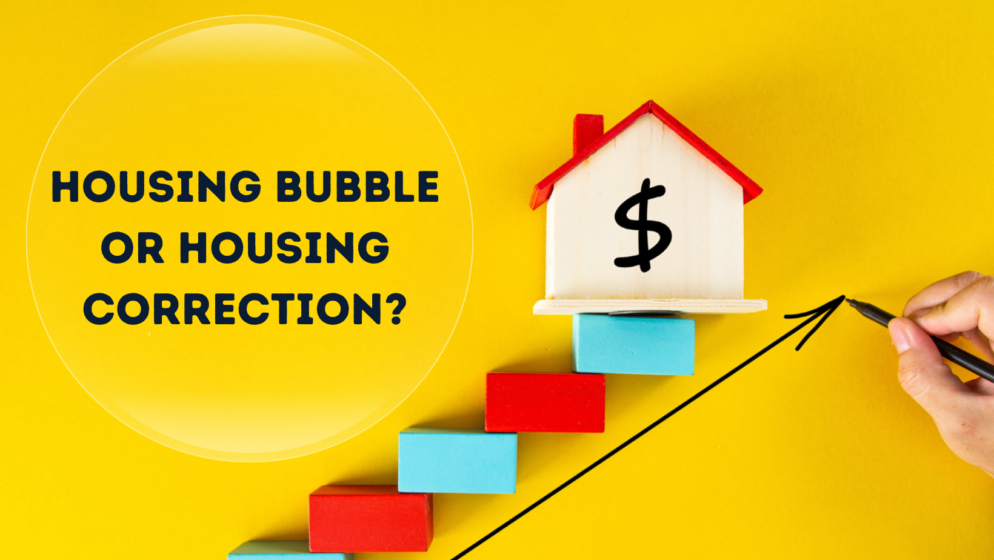
Housing Bubble or Housing Correction?

The Covid-19 pandemic housing boom seems to be coming to a stop. Mortgage rates have almost doubled since the beginning of the year, pricing buyers out of the market. Not to mention prices that are just not attainable for most buyers.

With the word recession looming and more and more people talking about one, the economy would be smart to watch what happens to the real estate market. The Bank of Canada’s (BoC) campaign to curb inflation by raising interest rates is having an intended effect on cooling the once hot housing market.

With borrowing costs climbing, as well as stock market fluctuations, buyer confidence is waning. As Canadians adapt to the new norms of Covid-19, the mad dash to leave metropolitan cities to the suburbs (where prices were more affordable) is slowing.

Some are calling for the real estate bubble to burst. If that were to happen it could have a drastic effect on the economy. Moving companies to home appliances and furniture stores are all affected by the housing market.

Statistics Canada (Stat Can) data shows the gross domestic product (GDP) advanced in Q1 2022. Nearly half of the quarter’s growth was due to residential investment, or homebuilding.

(Chart below) The share of GDP from housing investment (residential investment).

The good news for buyers trying to navigate the least affordable housing market this country has seen is that they will have less competition as bidding wars subside. However, prices are sticky in most market places. Even with less sales, supply is still tight.

As long as you didn’t buy a house in Q1, homeowners are sitting on record equity. With decades of price-appreciation it’s unlikely buyers will see many “deals” or “fire-sales” in the marketplace.

The craziness in the market over the past two years was due to come to an end at some point. At one point, buyers were so worried about missing out that they waived their right to a financing and building inspection condition. And, of course, each bidding war meant the winning bid often had to stretch on the price, propelling the market upward.

Overheated markets are unsustainable, but with a housing shortage in this country, it’s anyone’s guess whether prices will go down compared to pre-pandemic prices. People are always moving for a variety of reasons such as divorce, growing families, financial reasons and the big one, immigration.

Stats Can reports Canada aims to welcome 431,645 new permanent residents in 2022, 447,055 in 2023 and 451,000 in 2024. With those numbers, Canadians will need to start building more housing quickly or get ready for a supply and demand war.